

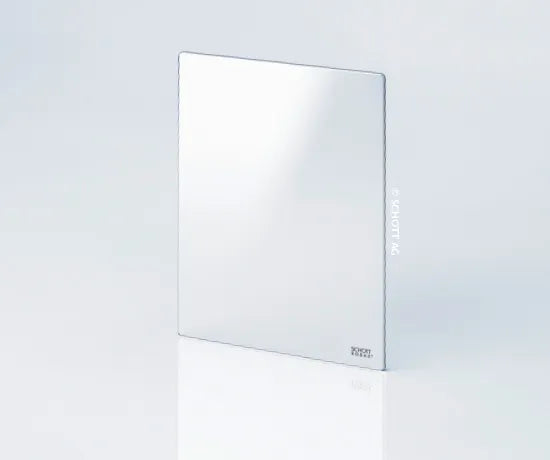
Robax glass is the material that sits between you and the fire in almost every modern wood-burning stove, and for good reason. If you choose the wrong material when buying a replacement panel, you risk not just another crack, but in the worst case, a genuine safety hazard. This guide explains what Robax glass is, why there is no technical alternative to it, how to measure, install, and maintain your panel correctly, and where to reliably obtain a custom-made fireplace panel made of SCHOTT ROBAX® glass-ceramic.
What is Robax glass and why is it no ordinary glass?
Robax glass is a transparent glass-ceramic from SCHOTT produced based on the lithium aluminosilicate system (Li₂O-Al₂O₃-SiO₂). Its near-zero thermal expansion makes it the first choice for fireplace panels and fire-viewing windows in stoves. Anyone who owns a wood-burning stove knows the dilemma: the viewing panel is cracked, soot-covered, or simply at the end of its service life. The initial impulse to quickly buy just any glass panel usually ends with another crack, a fire, or worse. This is because temperatures in the combustion chamber of a wood stove would cause standard glass, float glass, or even tempered safety glass (ESG) to fail in just a few minutes.
This is precisely where SCHOTT ROBAX® comes in: the most striking features of ROBAX® panels are their transparency, near-zero thermal expansion, and high temperature stability, making it an extraordinarily reliable and long-lasting material for high-temperature environments. schott.com
Robax glass is by no means a niche solution: with more than 110 million panels sold over 40 years, ROBAX® is a global market leader for fire-viewing panels for indoor and outdoor use. This is no accidental success, but the result of a material that technically follows an entirely different principle than normal glass. schott.com
Robax glass vs. normal glass: The crucial material difference
For many purchasing decisions, this section is the most important, as the difference between Robax glass and conventional glass lies not in the appearance, but deep within the material itself. Anyone who understands what distinguishes glass-ceramic from silicate glass will never make the wrong choice when selecting a panel again.
Glass-ceramic instead of silicate glass: What really defines the material
Normal float glass or tempered safety glass (ESG) are excellent materials for their respective areas of application. For windows, partitions, or furniture surfaces, they demonstrate their strengths, as described in detail in the Adamer blog: Areas of application for flat glass. In a wood-burning stove, however, they fail because they expand when heated and break under thermal shock.
Robax glass functions according to a different chemical principle. The glass-ceramic consists of a three-component system of Li₂O-Al₂O₃-SiO₂ with various additives. Production occurs in two separate process steps: first, the corresponding glass is melted; then, it is converted into glass-ceramic through a controlled ceramization process. During this process, crystal nuclei of TiO₂ or ZrO₂/TiO₂ form at temperatures between 600 and 800 °C.
A key property of these LAS-system glass-ceramics is the ability to produce materials with an extremely low coefficient of thermal expansion of less than 1 × 10⁻⁶/K in the range from room temperature to 700 °C. For comparison: float glass has a coefficient of thermal expansion of about 9 × 10⁻⁶/K – that is more than nine times higher.
What this means in practice: Robax glass effectively does not expand under extreme heat. It does not break due to temperature differences between the hot center and cold edge, and it withstands even abrupt temperature changes. Anyone wishing to delve deeper into the basics of glass production will find a practical introduction on the Adamer blog: Flat glass production: How modern flat glass is produced.
Comparison table: Robax glass vs. ESG vs. heat-resistant borosilicate glass
|
Property |
Robax glass (glass-ceramic) |
ESG (tempered safety glass) |
Heat-resistant borosilicate glass |
|
Max. short-term temp. |
up to 760 °C |
approx. 300 °C |
approx. 500 °C |
|
Thermal expansion |
near zero (< 1 × 10⁻⁶/K) |
~9 × 10⁻⁶/K |
~3.3 × 10⁻⁶/K |
|
Thermal shock resistance |
very high |
low |
medium |
|
Transparency |
very high (slightly champagne-colored) |
high |
high |
|
Breakage behavior |
like glass (sharp edges) |
safety glass (blunt crumbs) |
like glass |
|
Typical application |
stoves, ovens, hearths |
doors, shower enclosures, furniture |
laboratory glass, industrial ovens |
|
Disposal |
residual waste (not glass recycling!) |
glass recycling |
residual waste |
Technical properties of Robax glass in detail
Anyone buying or replacing a fireplace panel should know the technical characteristics—not to memorize engineering texts, but to make the right purchasing decision and correctly interpret warning notices in case of doubt.
Heat resistance: What temperatures can Robax glass withstand?
SCHOTT ROBAX® glass-ceramic withstands short-term temperatures of up to 760 °C without breaking due to thermal stress. Its near-zero thermal expansion reliably protects the panel even during abrupt heat and cold shocks.
Due to its very low thermal expansion, SCHOTT ROBAX® glass-ceramic even resists short-term extreme high temperatures of up to 760 °C and also withstands high heat and cold shocks. During normal operation of a wood stove, temperatures in the combustion chamber are typically between 400 °C and 600 °C.
When suddenly adding larger amounts of wood or in the event of overheating, values can briefly rise significantly higher; this is exactly when the glass-ceramic reliably provides protection. ROBAX® exhibits near-zero thermal expansion and is so robust that it does not suffer from thermal stress-induced breakage at extreme temperatures up to 760 °C.
Anyone wanting to learn more about heat-resistant glass in a general overview will find a comprehensive buyer's guide on the Adamer blog.
Chemical resistance and certifications
The excellent hydrolytic, alkali, and acid resistance of ROBAX® fire-viewing panels meets strict international testing standards ISO 719, 695, and DIN 12116. This is important during fireplace operation, as combustion residues are chemically active and attack inferior materials over the long term. SCHOTT ROBAX® panels are manufactured in accordance with ISO 9001, 14001, 45001, and 50001, and the entire production and testing process is TÜV-certified (TÜV PROFICERT product).
Raw materials and sustainability
ROBAX® glass-ceramic consists of 95% sand and two other natural raw materials. This makes it a comparatively resource-efficient product. The SCHOTT quality management system in accordance with ISO 14001 ensures that environmental aspects are systematically considered during production, a factor that is increasingly playing a role in the purchase of high-quality specialty glass.
When must a Robax glass fireplace panel be replaced?
A Robax glass fireplace panel must be replaced immediately once cracks, fractures, or breaks are visible. Strong, non-removable soot accumulation or suspicion of faulty seals are also clear reasons for replacement.
Fireplace panels are—much to the surprise of many stove owners—wearing parts. They can be damaged by incorrect operation (heating up too quickly, damp firewood), faulty installation, or mechanical impact (e.g., a falling log).
The most frequent reasons for replacement:
- Visible cracks or fractures in the panel
- Breakage due to thermal shocks or mechanical impact
- Stubborn soot accumulation that cannot be removed by cleaning
- Expired service life in very old devices
- Retrofitting of older hearths as part of the BImSchV modernization mandate
Regarding BImSchV relevance: On December 31, 2024, the final deadline of the 1st Federal Immission Control Ordinance (1. BImSchV) expired. Since January 1, 2025, new limit values for fine dust and carbon monoxide have applied, which must be observed for all hearths. Many households have modernized their wood-burning stoves or replaced them with new devices in this process, simultaneously requiring new fireplace panels.
According to chimney sweep industry statistics, one in four older devices is affected by this final replacement wave; the demand for devices and their installation is correspondingly high. haufe.de
A damaged fireplace panel must not continue to be operated. This is not a matter of aesthetics, but of safety: the panels have the same breakage properties as glass; if they fall or shatter, they create sharp edges. Installation should only be performed by trained specialists.
Robax glass to measure: Determining the correct dimensions
The most common problem when replacing a panel is a incorrectly measured replacement. Too large, too small, the wrong thickness—all of these lead to installation errors and, in the worst case, re-breakage. Before you place an order, it is therefore worth investing five minutes in careful measurement.
How do I measure my fireplace panel correctly?
Proceed as follows:
- Let the stove cool down completely—never work on a panel that is still warm.
- Remove the old panel—unscrew; for clamping or trim attachments: release the clamps.
- Lay the panel on a flat surface and measure precisely with a folding rule or ruler: width × height in millimeters.
- Determine the glass thickness: standard is 4 mm, some models require 5 mm.
- Order the gasket along with it: the old panel gasket must generally be renewed during replacement.
- A tolerance of ± 1mm can be compensated for during installation by the gasket.
Which glass thickness is the correct one?
Most commercial wood-burning stoves are designed for 4 mm Robax glass. Some manufacturers and older models require 5 mm. In case of doubt, a look at the manufacturer's documentation or measuring the old panel helps.
Adamer offers ROBAX® glass-ceramic in various dimensions and will advise you on the correct selection for your device.
Installing Robax glass: Step-by-step instructions
Installing a fireplace panel can be carried out with basic manual skills, but requires diligence and the right materials. Installation errors are the most common cause of premature panel breakage after replacement. The following instructions will guide you safely through the process.
What tools and materials are needed?
- Screwdriver (matching the stove model)
- Clean rags and protective gloves
- New panel gasket (self-adhesive, appropriate thickness)
- If necessary, high-temperature adhesive
- The new, custom-cut Robax glass-ceramic panel
Installation step-by-step
- Remove the stove door: place the door with the inside facing up on a stable base.
- Remove the old panel: loosen screws or clamps, remove the panel, carefully remove glass remnants.
- Remove gasket remnants completely: remove all adhesive and sealing tape residue from the door and frame.
- Attach the new gasket: cut the self-adhesive panel gasket to size and apply it.
- Insert the new panel: mount it according to the same scheme as the old panel.
- Secure the fasteners: tighten the screws or clamps again, reinstall the door.
Important for self-cleaning panels: For coated panels, the coated side must be installed facing outward toward the room; otherwise, the coating loses its effect. kaminscheibe.de
Installation errors when changing the fireplace panel can lead to the cracking of the fireplace panel during firing operation or negatively affect the panel airwash system on the fireplace. In case of doubt, installation should be left to a qualified glass specialist company. ofen.de
Care and cleaning of Robax glass fireplace panels
Robax glass fireplace panels must be cleaned only in a completely cooled state. SCHOTT recommends the special ROBAX® dry cleaner. Conventional glass cleaners are of limited suitability; scouring agents and rough sponges must generally be avoided.
The most frequent cause of accelerated soot accumulation is not the glass, but the operating mode: damp wood, incomplete combustion, and an air slider that is closed too far significantly promote soot deposits. Quality dried wood (residual moisture below 20%) and sufficient primary air supply keep the panel clear for significantly longer.
How to clean your Robax glass fireplace panel correctly:
- Let the panel cool down completely—never clean hot panels.
- Use SCHOTT ROBAX® dry cleaner: cleans without dwell time, without streaks, and without scratches.
- Alternatively: use a standard commercial glass cleaner—remove dirt according to the instructions, then wipe off completely to eliminate chemical residues before the next firing.
- No scouring agents, no rough sponges—the surface of the glass-ceramic reacts sensitively to scratches.
- All cleaning residues must be completely removed to avoid chemical reactions when the ROBAX® glass-ceramic panel is exposed to heat.
Initial treatment before the first lighting is also recommended: before first use, we recommend cleaning the SCHOTT ROBAX® glass-ceramic by wiping it with a damp, clean cloth; afterward, a few drops of a standard commercial care agent can be applied and rubbed in evenly. Afterward, wipe clean with a damp cloth and polish the glass dry with a clean, soft cloth. bauglaserei-suess.de
Robax glass variants: IR Max, IR SuperMax, and Night Design
SCHOTT has significantly expanded the ROBAX® product portfolio over the decades. In addition to the standard version, transparent and slightly tinted champagne-colored, several specialized versions are available today that differ in coating, heat reflection, and appearance. Which is the right one for your stove depends on the device, the intensity of use, and the desired visual appearance.
- ROBAX® Standard: The classic version in 4 mm or 5 mm, transparent, suitable for the vast majority of commercial wood-burning stoves.
- ROBAX® IR Max: With a heat-reflecting coating that reflects more infrared radiation back into the room—for higher efficiency and fewer soot deposits on the panel.
- ROBAX® IR SuperMax: The further development of the IR coating; the IR SuperMax coating for fireplace panels reflects significantly more heat than an uncoated ROBAX® fire-viewing panel; this can lead to higher temperatures and more efficient combustion in the combustion chamber, which, among other things, reduces the emergence of fine dust particles and CO. schott.com
- Night Design Portfolio: SCHOTT also offers semi-transparent black and tinted glass-ceramic fire-viewing panels as part of the Night Design portfolio for modern design fireplaces where the fire should appear aesthetic even without a direct view of the flame. schott.com
For classic wood-burning stoves in the living area, the standard version in 4 mm is the right choice. For newer, high-quality models, it is worth looking at IR-coated versions, which can noticeably increase the efficiency of the system.
Disposal of Robax glass: What many do wrong
One point that is regularly underestimated and causes problems in the recycling cycle if handled incorrectly: If you replace a SCHOTT ROBAX® fireplace viewing panel, it must be disposed of as normal household waste. Please do not put it in the glass recycling bin! Observe the regional waste disposal regulations. kaminglasshop.de
The reason lies in the chemical composition of the glass ceramic: it melts at different temperatures than normal silicate glass and disrupts the melting process in glass recycling. Incidentally, this applies not only to Robax glass, but to all glass ceramics as well as drinking glasses, mirrors, and coated glass.
If you would like to know more about correct glass disposal, you will find a detailed explanation in the Adamer blog: Disposing of drinking glasses: general waste or recycling center? And for those who want to know if and how glass can be cut, you will also find a practical guide there.
5 facts you should know about Robax glass and the fireplace market
Facts help more than promises when making purchasing decisions. The following figures show how relevant the topic of fireplace panels currently is and why the choice of material has more weight than many buyers assume.
- 110 million panels sold: With more than 40 years of experience and over 110 million ROBAX® viewing panels sold, SCHOTT is one of the leading manufacturers in the field of heat-resistant glass ceramics.
- 760 °C short-term temperature resistance: ROBAX® is characterized by extreme heat resistance up to 760 °C, minimal thermal expansion, and high resistance to thermal shocks.
- 300,000 new stoves annually: In Germany, about 300,000 new units are sold annually; according to industry estimates, more than 75 percent of the fireplaces sold are replacement units for outdated systems.
- Every fourth old unit affected: According to statistics from the chimney sweep trade, every fourth old unit is affected by the latest BImSchV replacement wave, and demand for new units and their installation is correspondingly high.
- Global fireplace market at nearly 7 billion USD: The global market for fireplaces was valued at 6,972 million US dollars in 2025 and is expected to grow to 7,541 million US dollars by 2032, with an average annual growth rate of 1.2%.
Robax glass: the technically correct choice for your fireplace panel
Anyone who cuts costs when buying a replacement fireplace panel usually pays twice: with a panel that breaks prematurely and the costs for re-installation. Robax glass is not a premium option for demanding technology fans; it is the technically correct answer to the extreme requirements in the combustion chamber of a stove. Transparency, temperature resistance up to 760 °C, almost zero thermal expansion, and TÜV-certified production have made SCHOTT ROBAX® glass ceramic the de facto industry standard for over 40 years.
Whether a standard size or custom-made Robax glass: Adamer provides competent advice on your fireplace panel and delivers the right solution. As a Bavarian family business with a tradition dating back to 1857, professional glass expertise is at the heart of what we do. Get in touch now and request a quote for custom Robax glass.
Frequently asked questions about Robax glass
Can normal glass be used for stoves?
No. Normal float glass or tempered safety glass (ESG) expands when heated and breaks due to thermal shocks, both of which are inevitable in the combustion chamber of a stove. Only tested glass ceramics such as SCHOTT ROBAX®, which have been specially developed for high-temperature use, are suitable for fireplace panels.
Can I change the fireplace panel myself?
With basic manual skills, the replacement is possible: let the stove cool down, remove the old panel, completely remove any remaining gasket material, and insert a new gasket and a new panel. It is crucial to always replace the gasket as well – assembly errors are the most common cause of a repeat break. In case of doubt, we recommend using a specialist company.
What can be done to prevent the fireplace panel from turning black?
The main cause of soot buildup is not the glass, but the operating method. Well-dried wood with a residual moisture content of less than 20%, sufficient primary air supply, and avoiding fires that are too small will keep the panel clear for significantly longer. Regular cleaning when the stove is cool using a special fireplace glass cleaner prevents stubborn deposits.
How often must the fireplace panel be cleaned?
That depends on the intensity of use and the quality of the wood. As a rule of thumb, we recommend cleaning every two to four weeks during the heating season or as soon as the view of the fire becomes noticeably cloudy. Important: always clean only when completely cooled down, and never use abrasive cleaners.


